Physical Address
304 North Cardinal St.
Dorchester Center, MA 02124
Physical Address
304 North Cardinal St.
Dorchester Center, MA 02124

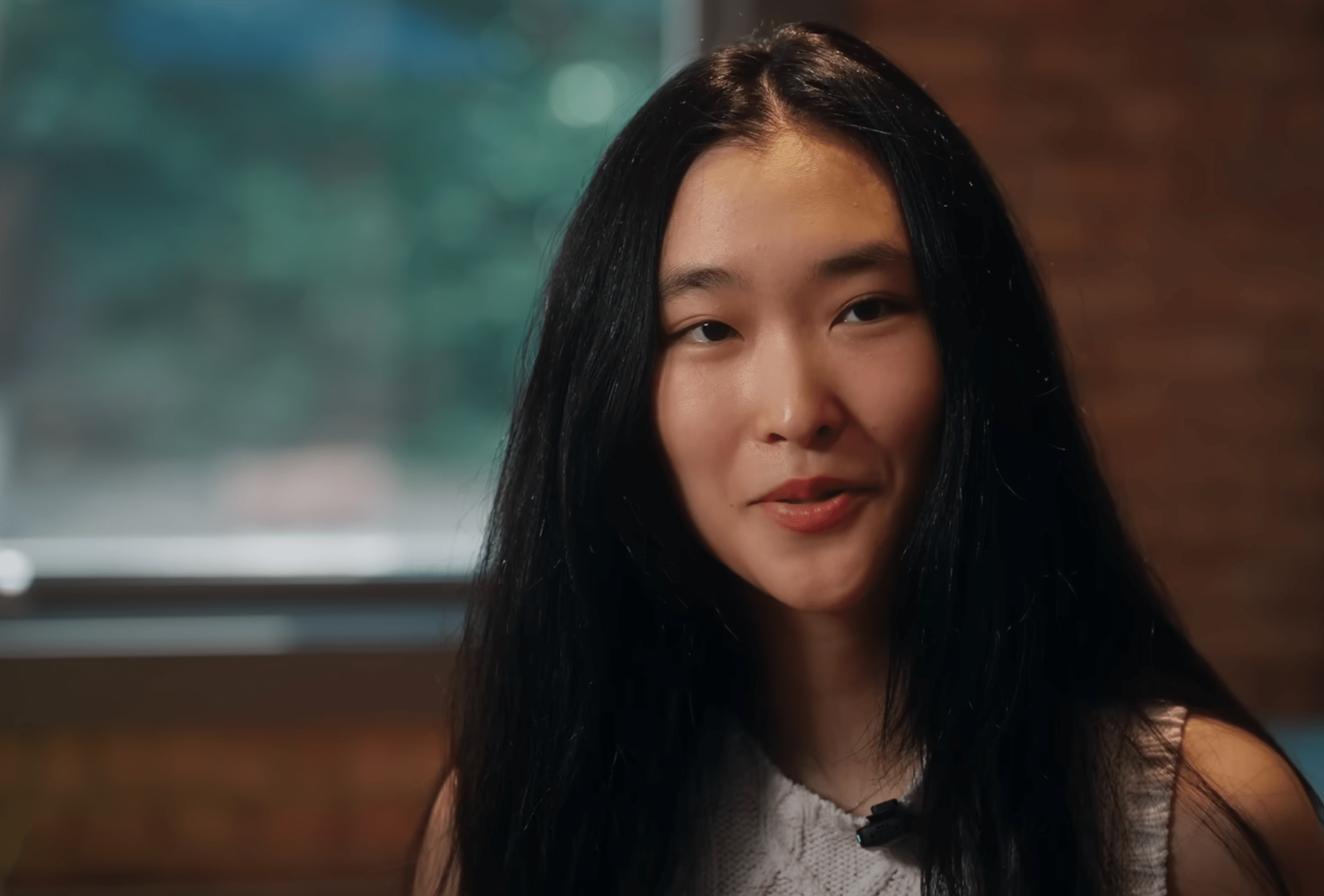
She’s a Chinese-American, born sometime in the early 2000s, which makes her around 22-23 years old today.
In an age where every founder has a carefully curated origin story—the garage, the dropout moment, the eureka in the shower—Jessica Wu’s silence about her childhood is almost rebellious. She doesn’t trade on her past. She lets her work speak.
But here’s what makes her story fascinating: she didn’t need a dramatic backstory to convince Silicon Valley’s toughest investors to bet $21 million on her. She just needed to be really, really good at what she does.
Jessica Wu straddles mathematics, computer science, and finance. She founded a fashion design company, conducted quantitative research at a hedge fund, and has experience in medical technology, cryptocurrency—these are all areas she has explored. In today’s terms, she is a proper slash youth, and even a Plus version.
Think about that for a second. By age 22, most people are still figuring out their major. Jessica had already:
This wasn’t ADHD or lack of focus. This was someone with ferocious curiosity, testing herself against every hard problem she could find.
In 2020, Jessica arrived at MIT—one of the hardest schools in the world to get into. She studied mathematics and computer science from 2020-2023, diving deep into subjects that make most people’s heads spin.
Her research areas included algebraic number theory, chaos theory, AI, and software construction. Under Professor James Yorke’s guidance, she used Python programs to simulate chaotic systems and combinatorial problems.
Translation for normal humans: she was studying how the universe works when it refuses to follow rules.
But MIT wasn’t just about theory for Jessica. During her freshman year, she met a tech-obsessed kid named Neil Deshmukh. At 14, Neil had created vision-based biometrics for his bedroom so his brother couldn’t get in. They became friends, bonded over AI, and started dreaming big.
Meanwhile, Jessica was also building something most MIT students never touch: real-world work experience.
While her classmates were grinding through problem sets and applying for summer internships, Jessica was doing something extraordinary.
She worked across venture, quant research, and trading at firms including Citadel, Goldentree, and Thrive Capital, and became the youngest quantitative researcher at a billion-dollar hedge fund.
Let that sink in. The youngest. At a billion-dollar hedge fund.
These aren’t places that hire people because they’re promising. They hire people who can make them money right now. Jessica, while still a college student, was competing against PhDs, MBAs, and Wall Street veterans—and winning.
Citadel is one of the most prestigious (and brutal) firms in finance. Thrive Capital backs companies like Instagram and Stripe. These firms don’t mess around.
What was Jessica doing there? Building trading algorithms. Analyzing market chaos. Making bets with millions of dollars.
And she hated it.
Picture this: In a cramped office, a 22-year-old girl was driven to the brink of collapse by the tedious and complex document integration.
This is the moment that changed everything.
Jessica had reached the top of finance. She had proven herself as one of the smartest young minds in one of the world’s hardest industries. And she was… miserable.
The problem? The tools.
Wu described traditional RPA as requiring hundreds of consultants to come in and operating on 1990s-era software that constantly broke. She was spending hours doing work that felt mind-numbingly stupid—copying data, filling forms, reconciling documents.
Here was someone who could simulate chaos theory in Python, who understood algebraic number theory, who was trusted to manage millions in trades… and she was manually copying invoices like it was 1995.
At that moment, the idea of asking AI to help send invoices and process freight documents emerged.
Most people would’ve finished their degree. MIT only takes about 3% of applicants. Jessica had made it. She was on track to graduate from one of the world’s best schools, with job offers from the world’s best firms.
But she didn’t care.
She and Neil Deshmukh dropped out of MIT together to focus on starting the business of Sola.
Think about the guts that takes. Not just leaving MIT, but convincing your best friend to leave with you. Telling your parents (who probably sacrificed enormously to support your education) that you’re quitting. Walking away from guaranteed wealth and prestige for an idea scribbled in a cramped office.
In June 2023, Sola Solutions was born. The initial team, including her and another co-founder, had only five people, headquartered in Jersey City, New Jersey.
Not Silicon Valley. Not San Francisco. Jersey City—a scrappy choice for scrappy founders.
The company received incubation support from the Summer 2023 batch of Y Combinator—the legendary startup accelerator that launched Airbnb, Stripe, and DoorDash.
Y Combinator is famous for brutal honesty. They don’t coddle founders. And they taught Jessica a lesson that nearly broke her.
Jessica’s hardest lesson at Y Combinator was “Stop overbuilding. Start selling”.
This hit different for someone from MIT and finance. In those worlds, you win by being the smartest. By building the most elegant solution. By perfecting the algorithm.
But in startups? You win by selling. By talking to customers. By solving real problems for real people—even if your solution is ugly.
Jessica had to unlearn everything that made her successful.
Here’s where Jessica’s story becomes truly unusual.
Most AI founders stay in San Francisco, pitch other tech people, and build tools for engineers. Jessica did the opposite.
The founder spent the past several months on the ground with freight brokerage leaders or with logistics customers at a golf conference, convincing them that this product would benefit their businesses.
Picture it: A 22-year-old MIT dropout at a golf conference for logistics companies. These aren’t young tech bros. These are 50-year-old operators who’ve been moving freight for decades, who’ve never used AI, who are deeply skeptical of Silicon Valley promises.
And Jessica showed up. Again and again.
Investor Sarah Guo noted that for a startup to really make a difference, the founder must leave Silicon Valley, and Jessica Wu is exactly like this—she’s been working on-site with traditional customers who are not familiar with AI products to promote her own products.
This is empathy in action. This is a brilliant young woman realizing that her MIT degree means nothing if she can’t help the truck dispatcher in Nebraska do their job better.
In August 2025, something historic happened.
Jessica Wu, Sarah Guo, and Kimberly Tan sat on a Zoom call. The trio behind the deal made it one of the most exciting recent deals in enterprise AI, and none of them could recall being part of an all-women deal in AI before.
Together, they closed $17.5 million Series A, bringing Sola’s total funding to $21 million (about 150 million yuan).
It’s not intentional that it’s three women behind these deals, all three say. But it is unusual.
In an industry dominated by men, where less than 2% of venture capital goes to women-led companies, this deal was a quiet revolution.
Jessica Wu doesn’t fit the stereotype.
She’s not a hoodie-wearing, fast-talking bro who moves fast and breaks things. She’s not trying to “disrupt” for the sake of disruption. She’s not interested in hype.
Wu’s mission is to eliminate the “grunt work” that still defines much of enterprise operations: “It’s not about replacing people—it’s about replacing the repetitive”.
Think about what she’s really saying: she wants to free humans from the soul-crushing parts of work. Not fire them. Free them.
Jessica hopes that Sola can ultimately take over all the manual labor that people actually don’t want to do.
This is someone who’s experienced burnout. Who’s sat in that cramped office doing work that felt meaningless. Who understands that most people don’t dream of copying invoices—they dream of doing work that matters.
One of Jessica’s principles is “If you can’t do it for 10 years, don’t start”.
This is profound coming from a 22-year-old. Most people her age are thinking about the next year, the next job, the next Instagram post. Jessica is thinking about the next decade.
She’s not building Sola for a quick exit or a flashy IPO. She’s building it because she genuinely believes she can solve a problem that affects millions of workers doing repetitive tasks they hate.
That’s the kind of thinking that makes investors write big checks.
Sola automates businesses’ most repetitive, manual tasks and relies on AI agents to complete these tasks, designed for end users who have no experience with AI—logistics, insurance, operational finance professionals across the country.
Translation: Remember that cramped office where Jessica was manually processing documents? Sola does that automatically.
Wu describes it as for old, verticalized, legacy businesses, doing everything from sending invoices to building shipments and doing data entry into healthcare portals—all the most manual, critical areas of the business.
The genius is in the simplicity. You don’t need to code. You don’t need to understand AI. You just record what you’re doing, and Sola learns it.
It’s AI for normal people.
As of 2026, Jessica Wu is 22 or 23 years old.
She’s already:
And she’s just getting started.
What makes Jessica’s story so compelling isn’t what she’s achieved—though that’s impressive. It’s how she’s achieved it: with empathy, with humility, with willingness to leave her comfort zone and learn from people who know nothing about AI.
As Sarah Guo said, “In order to serve all of these people that don’t come from your own experience or technical understanding, you really have to have both product vision and a lot of empathy and the ability to rally people to your side”.
That’s Jessica Wu. Not the loudest voice in the room, but maybe the wisest.
The Lesson: You Don’t Need a Perfect Story
Jessica Wu doesn’t have a cinematic origin story. We don’t know about her childhood struggles or her inspiring teacher or the moment she discovered her calling.
What we know is this: she showed up. She did the work. She learned from her mistakes. She left Silicon Valley to sell AI to people at golf tournaments.
And that, somehow, is more inspiring than any myth.
Because it means the rest of us—who don’t have perfect stories, who are still figuring it out, who feel lost sometimes—we can do it too.
We just have to show up. And start.