Physical Address
304 North Cardinal St.
Dorchester Center, MA 02124
Physical Address
304 North Cardinal St.
Dorchester Center, MA 02124


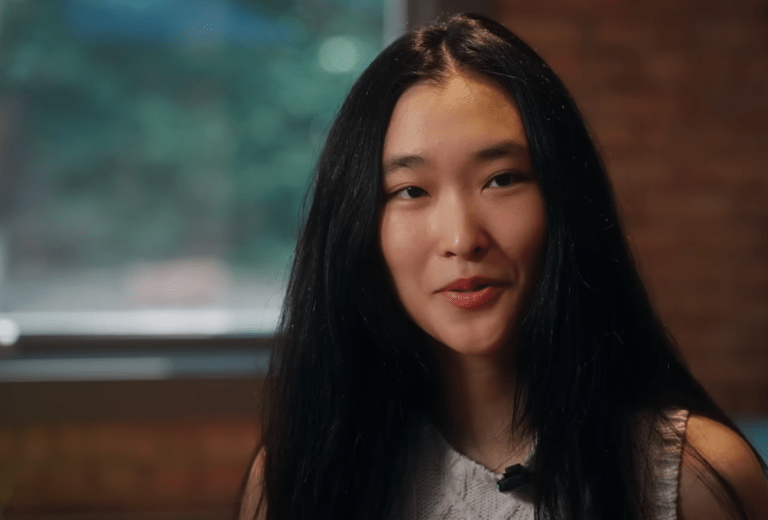
“So Ava, you just turned 20. How much money did you make last month?”
“700K.”
Jack just sat there for a second. You could see it on his face—that moment where your brain tries to process something that doesn’t make sense. Seven hundred thousand dollars. In one month. At twenty years old.
“Oh my god. I’m sorry, it just throws me off every time people say these numbers.”
And honestly? Same. But here’s what makes Ava’s story absolutely insane: she’s not selling courses. She’s not doing coaching calls. She’s not running ads. She’s running an actual done-for-you service business with over 100 employees, and she refuses to do anything else until she makes it “perfect.”
Let me tell you how this happened.
Picture this: Ava’s sitting in her social studies class, probably doodling or thinking about hanging out with friends after school. She’s 15. Straight A’s, normal teenager, no real thoughts about business.
Then her teacher starts talking about Andrew Carnegie.
Not just talking—romanticizing this dude. How he came from nothing, absolutely broke, and built a steel empire through pure scrappiness and determination.
Something clicked.
“So I just searched up on Google like ‘how to be successful’ or something stupid.”
She laughs about it now, but that “something stupid” changed her entire life. Google told her to read Rich Dad Poor Dad. So she made her sister drive her to Target immediately after school.
Here’s where it gets good.
They get home, and her dad is there—which was “super weird”—wearing a mask. He had COVID. This was right when the pandemic was starting, so boom: whole family quarantined for a week.
“I was off of school and I read that book probably like 2 days.”
Two. Days.
She devoured it. And the second she finished, she made her boyfriend Ben read it. Like, immediately.
“And we were like, ‘Oh my god, why wait until we’re 18? Why don’t we just start a real estate investing company now?'”
So they did. At 15 years old.
Okay, but hold on. They’re 15. They have no money. They can’t legally sign contracts. How do you even…?
“So Ben found this thing on YouTube—I think it was Ryan Pana—about couch flipping.”
Couch. Flipping.
Here’s the play: You go on Facebook Marketplace, find a couch for cheap, buy it, clean it up, take better pictures, and flip it for $300-500 profit.
“We did that the entire summer.”
And it worked. They were making $300-500 per hour when they could find couches.
But then came the hard part: actually buying property as minors.
“We basically direct mailed. We cold called every day after school because we went the off-market route trying to find properties.”
Every. Single. Day.
For three months straight.
“And it was—I always say this—but real estate’s pretty miserable.”
Jack laughed. “Because you’re talking to people on the phone who you’re trying to get them to sell you their house.”
“Yeah. And they hate you obviously. You get called a vulture, you get screamed at, and it’s just not fun.”
But after three months of getting screamed at, someone finally said yes. They got a duplex right outside Milwaukee for $100-200K (much cheaper than most markets, she notes).
They had their parents co-sign, got creative with LLCs, and just… made it happen.
Throughout all of high school, while everyone else was at football games and parties, Ava and Ben were building a real estate portfolio.
“After high school—so I graduated after my junior year—I just went full-time into real estate and I started posting just short-form content on social media about it.”
Just posting. Being young in business. A teenager in real estate. Documenting the journey.
“And within the first month, I got like 50,000 followers just from posting short-form content.”
Wait, what?
“And then I just realized it was so much better than real estate. And I was like, ‘Wow, I could probably do this for other business owners.'”
Think about the contrast here. She’d spent YEARS getting screamed at on cold calls, being called a vulture, grinding through rejections.
Then she posts some videos and gets 50,000 people to follow her in 30 days.
“I started doing that for other people and just cold outreaching with my Instagram account to business owners I saw online and I got a few clients.”
At first, she just edited shorts for them. But that slowly evolved into the full done-for-you service.
By August 2024, Ava had been running her business Instagram “Personal Brand Launch” for about a year. She had around 100K followers and was charging clients $2,000-4,000 per month.
Then she posted a video.
The hook? “Not to flex, but I’m pretty f*ing good at social media marketing.”**
The content? A step-by-step breakdown of how to grow an Instagram from scratch.
The results?
“7.9 million views, 13,000 leads.”
Jack’s eyes went wide. “And if people sign up with me, I do a monthly recurring done-for-you service. They’re paying anywhere from 2,000 to 4,000 a month to work with me. So we got a lot of clients.”
“How many clients from that video?”
“I want to say 100-something. But they basically turn into recurring revenue clients. Annually, that’d be 2 million.”
One. Video. Two million dollars in annual recurring revenue.
“That probably also brought in like 200K followers and a ton of leads. So that really took off.”
Jack was clearly trying to wrap his head around this.
“I just don’t understand how you can scale to that many people and maintain quality.”
“A lot.” Ava paused. “So we have a mix of 1099 contractors and W2. It’s over 100 right now.”
“Jesus Christ.”
“So it’s a lot of people.”
Here’s what her team actually does for each client:
1. Research (10-12 hours per month)
2. Script Creation
3. Client Films
4. Editing & Posting
Sounds simple, right?
Wrong.
“So Ava, you wake up at 3 AM?”
“It’s even worse now. For the past year, I’ve probably woken up at like 12 AM every day.”
“12 AM. So you’re pretty tired right now?”
“No, I’m good. I’m used to this.”
Let that sink in. She wakes up at MIDNIGHT. Not 4 AM like some entrepreneurship guru. Not 5 AM like a Navy SEAL.
Midnight.
“I will work for about 4 to 5 hours, and then I wake Ben up and we go to the gym.”
“Why do you wake up at midnight every day?”
“Honestly, I’ve just found that’s what works for me. Even though it sounds psychotic, I’m so used to it because I’ve been waking up at least 3 AM since I was 15.”
Since she was 15. To do real estate stuff before school. Or to read business books.
“But it’s just the one time of day where nobody bugs me. Not even Ben. Like he’s still sleeping and I actually can just get everything done.”
Her deep work from midnight to 5 AM? Whatever grows the business most:
“I want to say with agencies specifically, if you don’t use your agency, you have a problem. You need to use what you are trying to sell.”
So she reviews her own scripts. Reviews edits before they go out. And here’s the kicker:
“For now, what I haven’t outsourced yet is people creating the SOPs. I’m insane. It’s like every single mouse click of a process I will have written down.”
Every. Single. Mouse. Click.
She has written versions AND video versions of every SOP.
Jack picked up on something important.
“I would guess that a bottleneck you might have is that the virality portion—for your clients to get really good results, you’ve had at least some involvement in those particular scripts.”
“No, it is.” She didn’t hesitate. “Because right now I’m in almost every script set that we have going out.”
Wait. Let’s do math.
“Yeah, it’s super unsustainable.”
“And do you go through all those?”
“So basically, for the ones I can’t do ideation on, I review after they’re done and I’ll just make replacements if needed.”
She has ONE other person she trusts—Jane—who can review at her level. But:
“Both of us combined, we are both at our breaking point.”
This is why she wakes up at midnight. This is why she works 4-5 hours before the sun comes up. This is why she’s been trying to hire someone for ideation for TWO MONTHS and can’t find anyone.
Here’s what blows my mind: Ava gets offered EVERYTHING.
ManyChat wants to partner. Adobe offered her a deal (“a lot of money,” she said). Whoop wants her to promote their bracelets. Every big brand you can think of reaches out.
And she says no to all of it.
“I just like I don’t want anyone to have any control over it. I just want it to be mine and I just want to make it perfect.”
Jack was impressed.
“What I’m impressed with is that you haven’t gotten shiny object syndrome and been like, ‘Let me just drop a course. Let me drop something that everyone can buy a million times.'”
“I know if I want to make this service perfect before I ever do something else, I want to make it the go-to short-form content creation agency for business owners. And I just will not stop until that’s the case.”
Most people making $700K/month would cash out. Drop a $2,000 course and make millions without the operational headache.
Not Ava.
“I don’t want any other service or product I could make to take my time away from doing that.”
Jack wanted to know: for someone who can’t afford the service, what should they do?
“Step one, I would go to the Instagram explore page, type in my niche—like dog training. I would click the reels tab.”
“And then you want to look through all the videos that have over a million-plus views and just save the hooks that you would use.”
She calls it the “5x rule”: if a video gets 5x the account’s follower count, it’s viral.
“Then you add them to a spreadsheet. Those are the most viral hooks in that niche.”
But here’s the critical part:
“You don’t want to copy viral videos. That will just make you look like a fraud. You want to add your own value in the meat of the video. Your own actionable advice.”
Then she breaks down what makes advice actually valuable:
Bad advice: “Walk every day, lift every day, eat healthy.”
Good advice: “Walk 10K steps every single day. Do this exact 4-day split [shows the split]. Use this TDEE calculator online, subtract 200-300 calories, that’s your calorie deficit. Eat one gram of protein per pound of body fat.”
“It’s very clear what they need to do and they want to save that stuff because it’s actually helpful.”
“There’s one in particular. His name’s Carl and he’s like an older gentleman, probably like 65. He has like 10 kids.”
Carl is a franchise broker—he helps people buy franchises like McDonald’s, Burger King, etc., and gets a commission when they close.
“The reason I was nervous was because I don’t know anyone in the franchise niche. I tried to do research and there wasn’t really anyone.”
So she took research from other niches and adapted it.
First three months? Under 100 followers.
“I was like, ‘What the heck?'”
But month four?
“We got our first viral video. I think like 9 million views and it was breaking down how much you make owning a McDonald’s franchise.”
They took that exact format and just… kept replicating it with different franchises.
“He basically makes like 60K for every single person he gets and he gets like hundreds of leads.”
Sometimes Carl texts her: “Oh, we got five deals this week.”
Five deals. At $60K each.
“That’s like 300K.”
“Oh my gosh. Geez.”
Here’s a pattern Ava kept mentioning:
“With any new account, it’s the same thing. It just takes a while, but you’ll eventually get your first viral video and then you just double down on that. That is how you grow a page.”
Most people quit in month two.
Ava posts every day for four months, barely getting views, before the algorithm finally catches on.
“So I remember when I first saw Ben in the math hallway, I was like, ‘Wow, this is the most muscular hot dude I’ve ever seen.’ We were like 14.”
Two weeks later, they were dating.
“Thing with Ben is it was just never awkward. We were friends right away.”
About a month into the relationship, her mom was recording while her friends were over:
“I’m going to marry Benjamin William Otto. Play this at my wedding.”
She was 14.
They got engaged at 16.
Married at 19.
And at the wedding, they played that video.
“That video we got—it got 50 million on Instagram, like 60 million on TikTok, and it got in People magazine. We went on the news for it.”
Jack was curious about the marriage-young thing.
“Do you think everyone should marry their high school sweetheart?”
“Oh, hell no. No.”
She laughed.
“I just think I got so lucky with Ben. It’s just so rare to meet someone young who is literally the boy version of you who loves business, who loves working out, who is also kind of introverted, who just has the same religion, political beliefs, literally everything the same.”
“We did all this hard stuff together. We had all the same values. We were each other’s best friends. So it’s like, who else would I ever marry in my life than Ben?”
“But if you just love each other or you’re just attracted to each other, which that’s like a lot of what high school relationships are, and you don’t have other things, then no.”
Throughout the conversation, Ava dropped some absolute gems:
Sort Feed Extension ($40 one-time): “If you go on someone’s Instagram page and you click reels, you can click the little puzzle piece in the corner of your screen and you can select 100, 500, all of their reels and it will sort them from most to least viral.”
“Did you make a video about this?”
“Yeah.”
“That’s why I use it for sure. I use it every day.”
Hemingway App: “Putting your script in Hemingway, which is just a site, and you can make it under a fifth-grade level so a lot of people can understand it.”
“Why the fifth-grade reading level?”
“Because people are stupid. Like most people are stupid and they won’t understand it. So just make it dumb.”
“Why fifth grade specifically though?”
“Because most people statistically in the US are under a fifth-grade reading level.”
Brutal. But accurate.
Remember: she makes $700K/month.
Expenses are just under 50%, so about $350K profit per month.
That’s $4.2 million per year in profit.
At 20 years old.
“How do you invest this money?”
“I invest it into index funds.”
“Boring answers are the best.”
But here’s the wild part:
“I don’t take out much money from the company. I take out—me and Ben split our expenses—and it’s like $2,500 a month each for each of us. And then I also take out 5K to invest in index funds.”
$2,500 per month for personal expenses.
She lives in Wisconsin. Drives a “mediocre car.” Lives in a “mediocre ranch.”
“I don’t know. I buy Instacart groceries. We do have a nice gym membership, but that’s pretty much it.”
Jack asked if she’d considered buying a house.
“I think part of me is just I’ve never bought something big and nice like that for myself. So I think part of me just isn’t ready.”
She’s calculated that if she just keeps investing $5K/month until 65, she’ll have $25 million from index funds alone.
“And I could double that and I could do 10 grand a month and I’d probably retire with double if I start now.”
“Were you guys athletes in high school?”
“I wasn’t. I’ve always gone to the gym. I think I started freshman year and I always just did either a four or six-day split. And Ben in high school, he wrestled a ton.”
Ben wrestled with Ben Askren’s academy (the only big wrestler from Wisconsin, she notes) and went to state every year. Also played football.
Now they just hit the gym together every morning after she wakes him up at 5 AM.
“What’s your mission or goal with all of this long-term?”
“I really do like what Alex and Leila do, where they’re in private equity and they work with a lot of businesses and help them grow and invest in them potentially. That with Ben.”
“But right now we’re just really loving growing our own companies.”
Five years from now, she wants a portfolio: his business, her business, and others.
“But long-term, I don’t want to just do this forever. I see bigger things. I want to be a billionaire. I do.”
“I think that’s just a goal because I know I can do it. Not even for the money because obviously I don’t even buy stuff now, but just to prove to myself that I can.”
Near the end, Jack asked about the best advice she’d ever received.
“Treat everybody like they’re an undercover Jesus. You’ll notice how much better and kinder you are to people.”
She got it from “some religious person online” but it stuck.
“I used to just be the type of person who would never compliment strangers. I would just put my head down if I was walking past someone so I didn’t have to smile.”
“But it’s definitely changed the way I even handle little interactions day-to-day.”
This came from growing up around men who:
And women who accepted it: “Ava, that is just what men do. That’s just a guy thing.”
“And I refuse to believe that men are not in control of what they do.”
She brought up a Bible verse about how looking at another woman lustfully is already committing adultery in your heart.
“It’s basically saying that mentally lusting after someone and physically being with someone while you still have a partner, they’re all cheating. There’s not certain levels. One’s not worse than the other. It’s all cheating.”
As the conversation wound down, Ava dropped some absolute bangers:
On what NOT to do: “Never fall for the engagement hacks that you have to engage 15 minutes a day or you have to do XYZ comments after you post a video or you have to post at XYZ time. All that’s BS. Don’t even listen.”
On AI: “The biggest mistake is using it to write your scripts. You can use it for research, but using it to write your scripts, I wouldn’t recommend unless you completely refine it after.”
On buying followers: “Oh my god, that will destroy your account. If you buy, just make a new account. Give up on the account because it will destroy your account.”
On ChatGPT tells: “Here are the phrases: ‘Here’s the truth.’ ‘Skyrocket.’ The double dash. I can now recognize how it talks and how it words stuff.”
On getting to the value: “A lot of times with short-form content, people will say the hook and then they’ll say four other things and then they’ll get into the value. Just get to the value straight away right after the hook.”
On formats: “I would say the people who can consistently go viral and have the best personal brands do talking head format because even if they get less views, you always get more followers, more likes, more engagement, more leads.”
Jack wanted to see her craft a viral video in real-time.
“If you had to go from zero to a million dollars in six months, how would you do it?”
Watch what she did:
“Step one, I would go to the Instagram explore page. I would hit the search bar. I would type in my niche and then I would click the reels tab and I would save like a hundred videos over a million views.”
“Then step two, take the hooks from those videos and the general topic of those videos and I would write 30 scripts with those viral hooks but my own niche expertise as the value.”
“I would post those videos every single day on one account and I would just repeat that over and over again until I got my first viral video.”
“And then step three, I would double down on that viral video, the hook that was used, the topic that was talked about, and I would just change the formats up and I would just keep posting that and you will grow.”
Notice:
“I would add visuals to that. So if I’m explaining the research process, add a screen recording doing that.”
That was her 7.9 million view video formula.
The hook? “Not to flex, but I’m pretty f*ing good at social media marketing.”**
“I asked—it’s so funny—after that video came out, all the guests started saying ‘good question’ on the podcast at a really high rate.”
Ava had noticed.
“And then every single comment on my videos were like, ‘Dang this guy asks good questions.'”
“People would say to me in person, ‘Bro, your podcast is great. You ask such good questions.’ I’m like, this didn’t used to happen. It’s like you’re implanting—you’re literally influencing people’s opinions.”
Ava had spotted the pattern:
“What I’ve noticed about you is you’re very neutral on podcast. You’re very calm and you don’t force your opinions on people or you don’t judge people for what they say, which I feel like is rare because people always want to talk and influence their opinion on people’s answers.”
“But I really like you as a host for that reason.”
Jack acknowledged it was intentional:
“We haven’t hosted some of our past controversial guests a second time because we didn’t want to fall too much into a niche.”
“I think there’s a lot of power in being neutral. I think it creates better content if people feel comfortable.”
“Personally, I hire based on experience, not a degree. If you have results, that is all I care about.”
“I think if you’re not getting a degree—if you want a job that doesn’t need a degree—then don’t go to college. But if you want to be a dentist or a vet, go to college.”
“But anything else, just start right when you graduate so then you can fail and live with your parents until you succeed. And you’ll have all those four years just to fail, fail, fail, and you’ll eventually succeed.”
Her sister is the opposite: straight A’s, 4.0, graduated with honors, going to be “the best employee.”
“I want her, but I know she’ll never work for me.”
Jack related:
“Very similar situation with my sister. She’s about to graduate college. She’s becoming a doctor of neuroscience.”
“I wanted her to work for me when I was like 18-19 to be a writer for the crime channel because she’s the only person that can write like me.”
“But we just clash super hard.”
“This might sound depressing, but I just have very few friends. There’s friends from high school that now go to college that we’ll hang out maybe three times a year. Those are like my friends.”
“But my true one friend is just Ben.”
“But I love Ben and I only need Ben.”
Earlier, she’d mentioned:
“I have like a rebellious phase when I was like 13, 14. I kind of had that phase of just not doing the best stuff or just being too young to do certain things. But I kind of had that party phase.”
“And looking back, I wouldn’t say ashamed, but I’m just not proud of her. And I wouldn’t really want to be her.”
When Jack asked about Iman Ghadzi’s regret—never experiencing college parties and friends—Ava was clear:
“It just depends. If you know drinking and doing that stuff is what you think you’ll look back on and that will be the good old days for you, then yes, go to college, do your thing.”
“But I don’t want my life to be—I don’t want to ever be like that again.”
“Who’s the most impressive person you’ve ever met?”
“Probably Alex Hormozi in person.”
She’d just been at his workshop in Vegas (acquisition.com) with him and Leila.
When Jack mentioned interviewing both of them:
“Hormozi is the hardest person to interview ever, by the way, because the way he thinks—”
“I’m like, ‘Would your businesses have been more successful if you prioritized your relationship sooner?’ He’s like, ‘I don’t know. I don’t really think about it.'”
“He won’t think about anything in the past.”
“And then he’s like, ‘That word doesn’t make sense to me.'”
Ava laughed. “Yeah, I listened to that episode. That was funny. There was just some of those very short answers and you’re like, ‘Okay, next question.'”
But she studies them religiously. Their portfolio company model is exactly what she wants to build with Ben in five years.
Jack brought up something most people don’t know:
“Have you thought about moving to Puerto Rico with that much cash flow?”
“Why Puerto Rico?”
“It’s the only place in the US you can move to, keep your residency, and you pay I think it’s 3% income tax and then 0% capital gains.”
“I don’t know what it is in Wisconsin, but it’s probably 40-50% a year goes to the IRS.”
“Yeah, it’s 40%.”
“Puerto Rico’s 3%.”
Jack described Dorado—this Ritz Carlton-built community where wealthy people live.
“My quarterly tax bill is like multiple hundreds of thousands. It sucks.”
Ava just sat with that information.
For someone making $4.2M/year in profit, paying 40% in taxes means losing nearly $1.7 million to taxes annually.
In Puerto Rico? About $126,000.
That’s a $1.5 million difference.
Every. Single. Year.
“What’s one question you wish people would ask you about social media, but they don’t?”
“Probably ‘What do I NOT need to do?'”
“Because I think on social media, unfortunately, especially in my niche, there’s so many things that are promoted that you should do. So many things that people think they have to do to grow an account.”
“I think people should ask more about what they can eliminate.”
“Because there’s so much noise and so many fake things that you don’t even need to do.”
“And during my huge growth phase, I didn’t even have time to go on Instagram at all. I wouldn’t even engage on the platform. My assistant posted for me, so I wouldn’t even be on it and I still grew.”
This is HUGE.
All the gurus telling you to “engage 15 minutes a day” or “comment on 50 posts” or “post at the optimal time”?
Ava proved you don’t need any of it.
She grew to 500K followers while barely opening the app.
Right at the end, Jack asked about college again, and Ava dropped this:
“I think college is a waste of time and money if you’re not using the degree you get.”
Simple. Direct. From someone who makes more than most college graduates will make in their entire careers.
But then she said something that shows why she’s actually different:
“But when it comes to school, my sister is very dedicated. 4.0, straight A’s, graduated with honors. She just graduated college this past May.”
“She’s going to be the best employee. I want her, but I know she’ll never work for me.”
No shade. No judgment. Just recognition that different paths work for different people.
Her path? Wake up at midnight. Review 8,000 scripts a month. Say no to every shiny object. Treat everyone like undercover Jesus. Build one thing to perfection.
Ben’s path? Wake up at 5 AM when she wakes him. Hit the gym together. Run his landscaping crews. Come home at 2 PM. Hang out with his wife who makes $350K/month in profit.
They’ve been together since 14. Engaged at 16. Married at 19. Best friends who built businesses together while everyone else was figuring out who to ask to prom.
Here’s what nobody tells you about Ava’s success:
She posted every day for FOUR MONTHS to under 100 followers before her first viral video hit.
Most people quit in week two.
She wakes up at midnight because that’s the only time nobody needs her.
Most people can’t even wake up at 6 AM.
She says no to six-figure brand deals because they’d distract from perfecting her core service.
Most people would take the money and run.
She reviews almost every single one of 8,000+ monthly scripts because when she stepped back, quality dropped.
Most people would just hire someone and hope for the best.
She’s been with the same person since age 14, engaged at 16, married at 19, and has basically no friends outside of Ben.
Most people think you need to “find yourself” first.
She makes $700K/month and takes $2,500 for personal expenses.
Most people would immediately upgrade their lifestyle.
She wants to be a billionaire “just to prove to myself I can” even though she doesn’t buy anything.
Most people want money for the stuff.
The story isn’t that she got lucky with a viral video.
The story is that she did everything required to eventually get that viral video, and when it hit, she had the systems in place to capitalize on it, the discipline to maintain quality at scale, the focus to say no to distractions, and the humility to keep living like she makes $30K/year.
At 20 years old.
Waking up at midnight.
Married to her high school sweetheart.
Running a $8.4M/year business.
With 100+ employees.
In Wisconsin.
Treating everyone like undercover Jesus.
That’s the real story.