Physical Address
304 North Cardinal St.
Dorchester Center, MA 02124
Physical Address
304 North Cardinal St.
Dorchester Center, MA 02124

Inside China’s Extreme Education System and the Youth Rebellion It Sparked
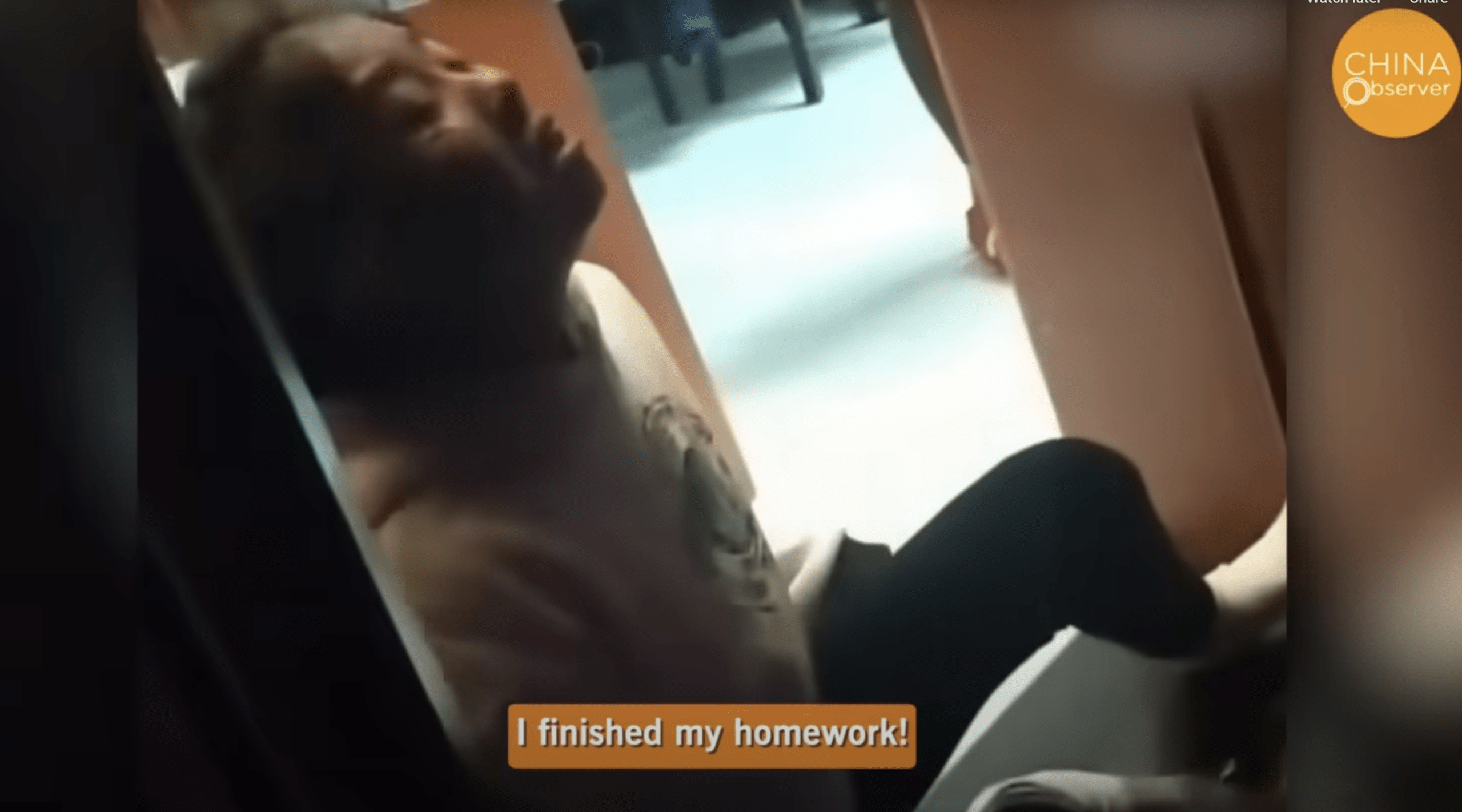
The videos surfaced online like a digital cry for help: Chinese high school students celebrating with unbridled joy, not because they won a championship or received acceptance letters to prestigious universities, but because they were finally getting two days off on the weekend. That’s it. Just two days—the same weekend schedule considered standard in most of the developed world.
But in China, where students routinely face six or even seven-day school weeks, where morning sessions begin at 6 a.m. and night study halls can extend until 11 p.m., this small concession represented a hard-won victory in an education system that critics say has become a pressure cooker threatening the mental health and future of an entire generation.
At Ruizhou Number One High School in Hunan Province, students reached their breaking point. In an act of defiance that would soon ripple across the nation, hundreds of teenagers gathered in the schoolyard and began tossing paper into the air—sheets of assignments, notebooks, anything they could find—in protest against mandatory ‘voluntary’ study sessions on Saturdays.
These weren’t troubled students or academic underperformers. According to students who participated, these were the cream of the crop—high achievers who loved learning and took their education seriously. But they wanted something their parents’ generation had never dared to demand: the legal right to a weekend.
“We all want to study well and do really well in school,” one student explained in an online post that went viral, “but we also want to be able to enjoy our legal and well-deserved weekends.”
The school’s response was telling. Rather than addressing the students’ concerns directly, administrators held emergency meetings with parents, effectively deflecting responsibility and creating conflict between families. Witnesses reported seeing arguments and fights break out in school hallways as parents confronted their children, some taking the school’s side, others supporting the protest.
But this time, the students won. After days of tension and growing online attention, the school issued an announcement: students would receive a full two-day weekend.
To understand why students are celebrating something so basic, you need to understand what their daily lives actually look like. For many Chinese high school students, particularly those in boarding schools, the schedule is relentless:
| Time | Activity |
| 5:00 AM | Wake up, prepare for the day |
| 6:00 AM | Morning reading session (reciting lessons out loud) |
| 9:00 AM – 3:00 PM | Regular classes |
| 3:00 PM – 4:00 PM | Break/dinner |
| 6:00 PM – 11:00 PM | Evening self-study sessions |
| Total | Approximately 15-18 hours per day, 6-7 days per week |
This schedule means that many students rack up over 100 hours per week just in study time—more than most adults work in their full-time jobs. For students living in dormitories (common for those from towns without middle or high schools), the isolation from family compounds the stress. Many don’t go home even on their single day off because the travel time isn’t worth it for just one day.
The ‘morning reading sessions’ mentioned in the schedule deserve special attention. The concept is simple: students read their lessons out loud to help memorization. The execution, however, has become extreme. Videos show students shouting their lessons at top volume, creating scenes that, as one observer noted, make the New York Stock Exchange trading floor ‘look like a library.’
Behind the statistics and schedules lies a more troubling story. China has recently experienced what can only be described as a wave of student suicides—young people ending their lives because they can’t cope with the pressure, isolation, and relentless demands of the education system.
One viral photograph that circulated online showed a student who appeared to be around 14 or 15 years old with gray hair—a physical manifestation of the stress these young people endure. While individual cases are difficult to verify, the image became symbolic of a broader crisis that parents, educators, and even government officials are beginning to acknowledge.
The irony is profound: education is supposed to nurture young minds, develop critical thinking, and prepare students for productive lives. Instead, critics argue, China’s system is creating what one commentator called ‘test machines’—students who excel at memorization and regurgitation but struggle with creativity, innovation, and independent thought.
The protests at individual schools were just the beginning. What emerged in 2024-2025 was something unprecedented: a coordinated, digital movement called ’61.IU’ that allowed students across China to document and expose the conditions at their schools.
Using VPNs to bypass China’s internet censorship, students created an online platform where they could anonymously report:
• Which school they attend and what grade they’re in
• Total weekly study hours
• Instances of student suicides or mental health crises
• Whether their school forces ‘voluntary’ Saturday sessions
At the time of reporting, the platform had collected approximately 4,000 entries representing different schools across China—a damning database of educational excess. A second phase documented around 260-270 schools specifically enforcing the controversial ‘voluntary’ weekend sessions.
The movement’s impact was significant. Schools that were exposed on the platform faced public pressure to reform. Many were forced to actually give students their legally mandated days off, while others had to concede other reforms like starting semesters later or honoring national holidays that had previously been ignored.
In some cases, the victories were almost comedic. Students would arrive at school gates only to be turned away and told to come back a week later because the administration had suddenly decided to delay the semester start—a direct response to being called out online.
Not all reactions to the student protests have been supportive. In parent chat groups, some adults expressed frustration that their children were getting weekends off. ‘I don’t even get two days off,’ one parent complained. ‘How is it fair that they get to stay home and play video games?’
This response reveals the complex psychology driving China’s education intensity. Many parents, especially those with only one child (a legacy of China’s former one-child policy), see their child’s education as their sacred duty and their best hope for ensuring their offspring’s future success. In a hypercompetitive job market where college degrees are nearly universal and good jobs are scarce, parents feel that pushing their children harder is the only way to give them an edge.
The reality, however, is grimmer than these parents might want to admit. China’s job market has become so saturated with degree holders that even exceptional educational credentials often lead nowhere. The system has created an arms race where everyone studies harder and longer, but the relative advantage disappears because everyone is doing the same thing.
Critics of China’s education system argue that the relentless focus on memorization, test scores, and rote learning serves a specific purpose: creating a compliant, hard-working labor force rather than fostering innovation and independent thinking.
The comparison to China’s ‘996’ work culture—working from 9 a.m. to 9 p.m., six days a week—is deliberate. The grueling school schedule of 6 a.m. to 11 p.m., six or seven days a week, can be seen as preparation for a similar work culture. Students are being conditioned to accept that extreme working hours and minimal personal time are normal and necessary.
This approach stands in stark contrast to other East Asian countries that once had similar systems. Japan abolished six-day school weeks in 2002, though some lawmakers have recently discussed bringing them back. South Korea also moved to five-day school weeks, though students there still face significant pressure from private after-school academies.
The focus on testing and memorization may explain why China excels at manufacturing and incremental improvements but struggles with breakthrough innovation. Students learn to reproduce what’s already known rather than explore new possibilities. They’re trained to find the right answer, not to question whether the question itself is right.
The extreme time commitment serves another purpose beyond academics. Students are also being systematically indoctrinated into Communist Party ideology from an extremely young age.
Elementary school children as young as six or seven join the Young Pioneers, the Communist Party’s youth organization. Videos show these children, wearing red scarves, raising their fists to pledge loyalty to the Party. The combination of intense academic pressure and political indoctrination creates a system where students learn early that the government’s way is the only acceptable way.
The system doesn’t just demand their time; it demands their minds. Students are taught not just to accept the extreme workload but to believe it’s for their own good, that the Party knows best, and that questioning these fundamental assumptions is unthinkable.
The Ruizhou paper protest wasn’t an isolated incident. Throughout 2024 and early 2025, student demonstrations erupted across China:
• Students at one school wrote on blackboards: ‘We are tired. We want weekends.’
• At another school, students gathered on athletic fields chanting ‘Double weekend off!’
• At a Uyghur Muslim school, students protested having only 22 hours of free time per week
• Multiple schools saw walkouts when students were forced to attend school during national holidays
What makes these protests remarkable is not just their frequency but their success rate. In many cases, schools backed down. The combination of public exposure through the 61.IU platform, student solidarity, and growing awareness of the mental health crisis created enough pressure to force change.
For students who’ve won the right to two-day weekends, the celebration is genuine. After years of relentless schedules, having Saturday and Sunday free represents a chance to rest, see family, pursue hobbies, or simply be teenagers.
But questions remain about whether these reforms will stick. Some parents worry that schools will find new ways to extract money and time—charging for ‘optional’ Saturday tutoring sessions that become effectively mandatory through social pressure. Others wonder if the schools will simply increase the intensity during the five weekdays to compensate.
The bigger challenge awaits these students after graduation. When they enter China’s workforce, they’ll encounter the same 996 culture—or worse—that their parents endure. Will the spirit of resistance they’ve shown in school translate to workplace activism? Or will they, like many before them, choose to ‘lie flat’ (tang ping)—a Chinese social movement where young people opt out of the rat race entirely, refusing to work extreme hours or pursue traditional markers of success?
The student protests over weekend schedules might seem like a small thing—teenagers wanting time off to play video games or hang out with friends. But they represent something more significant: a generation learning to stand up for their basic rights, even in a system designed to demand total compliance.
These students are growing up in a China that’s different from their parents’ experience. They have access to information (despite censorship), they can organize (despite surveillance), and they’ve discovered that collective action sometimes works (despite the risks).
The fact that celebrating a two-day weekend is newsworthy tells us everything we need to know about how extreme the system has become. But the fact that students successfully fought for that right tells us something hopeful about the future: this generation isn’t willing to accept that extreme pressure and sacrifice are the only path forward.
Whether this represents a genuine shift in Chinese society or just a temporary victory before the system finds new ways to extract compliance remains to be seen. But for now, thousands of Chinese teenagers have something they never had before: Saturday and Sunday to call their own. And they had to fight for every minute of it.