Physical Address
304 North Cardinal St.
Dorchester Center, MA 02124
Physical Address
304 North Cardinal St.
Dorchester Center, MA 02124

Three years ago, Sarah was a marketing manager in Seattle, stuck in endless Zoom meetings and dreaming of something different. She loved writing but had no idea how to turn it into money. Her blog had 47 followers (mostly friends and her mom).
Today, Sarah makes $8,400 per month writing a newsletter about productivity for busy parents. She works from coffee shops, picks her kids up from school, and actually loves Mondays. She’s not famous. She’s not a celebrity. She just figured out Substack.
And here’s the crazy part: she’s not alone.
There’s Marcus, a former teacher in Nigeria who now makes more from his education newsletter than he did teaching. There’s Yuki in Japan who writes about minimalist living and earns $3,000 monthly. There’s Ahmed in Egypt sharing tech insights to 600 paid subscribers.
What do they all have in common? They started with zero subscribers and learned as they went.
This is their story. And it could be yours too.
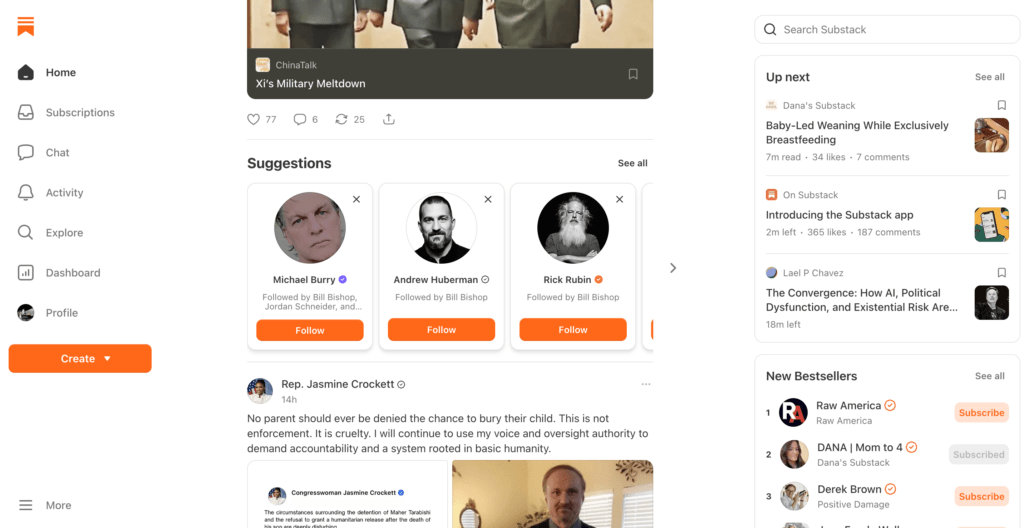
Forget the technical jargon for a second. Here’s what Substack really is:
Imagine you could charge people to read your emails.
That’s it. That’s Substack.
You write. People subscribe. Some pay you money. You keep most of it. No boss. No office. No asking permission.
It’s like having your own tiny publishing company, except you don’t need an office, employees, or even fancy equipment. Just you, your thoughts, and people who want to read them.
Here’s what happens:
Every month, money appears in your bank account. Automatically.
Let’s talk money. Real money. Not “influencer” money or “tech startup founder” money. Real people money.
Meet James from London:
Meet Priya from Mumbai:
Meet Carlos from Mexico City:
Meet Lisa from Toronto:
Meet Dan from Australia:
The pattern? Everyone started at zero. Everyone struggled at first. Everyone wanted to quit. But they didn’t.
Before we go further, let me be real with you.
❌ You want to get rich in 3 months ❌ You hate writing (like, really hate it) ❌ You can’t commit to at least 6 months ❌ You need money desperately right now ❌ You give up when things get hard ❌ You’re not willing to learn and improve ❌ You think success happens by accident
✅ You enjoy writing or want to learn ✅ You have knowledge or perspective worth sharing ✅ You can write at least once a week ✅ You’re patient enough to build over time ✅ You’re willing to promote your work ✅ You can handle rejection (most people won’t subscribe) ✅ You want to own your audience (not rent it from social media) ✅ You’re looking for a real side income or career change
The honest timeline:
Can it happen faster? Yes. Will it happen slower? Maybe. But these are realistic expectations from hundreds of writers.
Day 1: The Big Decision
Sit down with a coffee (or tea, or water) and answer these questions:
Real example – Marcus from Nigeria: “I was a teacher. People always asked me how to explain difficult concepts to kids. That was my topic. Simple as that. Now I write about education and teaching methods.”
Write down 3-5 topic ideas. Don’t overthink it yet.
Day 2: Pick Your Lane
From your list, choose ONE topic. Here’s how to decide:
Good topics:
Bad topics (usually):
Real example – Yuki from Japan: “I chose minimalism because I live it. Every day. It’s not a job to write about it—it’s just sharing my life. That’s the secret. Pick something that’s already part of you.”
Day 3-4: Study the Competition (Yes, This Matters)
Go to Substack and search for your topic. Look at the top newsletters:
Don’t copy them. Learn from them.
Real example – Ahmed from Egypt: “I saw 10 tech newsletters, but they all focused on American companies. I started writing about tech from a Middle Eastern perspective. That was my unique angle. Now I have readers from 40 countries.”
Day 5: Create Your Substack
Okay, here we go. The actual setup:
Naming tips:
Real example – Sarah from Seattle: “I almost called it ‘Productivity Paradigm Perspectives’ because I thought it sounded professional. Thank God I didn’t. I went with ‘The Productive Parent’ instead. Simple. Clear. People get it immediately.”
Day 6: Design Your Space
Now make it look good:
Profile photo:
Publication description: Write 1-2 sentences that answer: “What will I learn if I subscribe?”
Bad example: “Thoughts and musings about various topics” Good example: “Weekly strategies for busy parents who want to get more done without burning out”
About page: Tell your story in 200-400 words:
Real example – Carlos from Mexico City: “I was scared to write my About page. I’m not a CEO or famous writer. But I wrote: ‘I’m Carlos. I spent 10 years in corporate hell and figured out how to escape. Now I help others do the same.’ People loved the honesty.”
Day 7: Write Your First Three Posts
WAIT! Don’t publish yet. Write three posts first. Here’s why:
When someone finds your Substack, they’ll look around. If there’s only one post, they think “Is this person serious?” If there are three posts, they think “Oh, this person is committed.”
Your first three posts should be:
Post 1: Your origin story
Post 2: Your best advice
Post 3: A helpful guide or tutorial
Each post should be:
Day 8: Publish Post #1
Deep breath. Click publish. Send it to everyone (your whole list—which might just be you right now, and that’s okay).
Day 9: Tell Everyone (Yes, EVERYONE)
This is where most people fail. They write great stuff and tell nobody.
Share on:
What to say: “Hey! I just started a newsletter about [topic]. First article is about [headline]. Would love if you checked it out: [link]”
Real example – Priya from Mumbai: “I was so scared to share on my Facebook. I thought people would think I was showing off. But I did it anyway. My cousin subscribed, then her friend, then her friend’s colleague. My first 50 subscribers came from that one Facebook post.”
Day 10: Publish Post #2
Keep the momentum going. Publish your second post.
Day 11-14: Engage Like Crazy
When people comment, respond to EVERY SINGLE ONE. When people subscribe, thank them (Substack lets you send welcome emails).
Week 3: Establish Your Schedule
Pick a day and time to publish. Same time every week.
Best days:
Why consistency matters: People form habits. If they expect your email every Wednesday at 10am, they’ll look for it. Break that pattern and they forget about you.
Real example – Lisa from Toronto: “I publish every Tuesday at 7am Eastern. My readers know it. Some email me if I’m late. That accountability keeps me going even when I don’t feel like writing.”
Week 4: Get Your First Paid Subscribers
After 3-4 weeks of free content, turn on paid subscriptions.
How to price:
For beginners:
For established writers (6+ months):
For expert/premium content:
What to make paid vs. free:
Strategy 1: The Teaser (Most Popular)
Strategy 2: The Ratio
Strategy 3: Everything Free (For Now)
Real example – James from London: “I tried paid subscriptions in month 2. Got zero paid subs. Felt terrible. Switched back to all free content for 4 months. Built to 600 subscribers. Then tried again. Got 40 paid subscribers in the first month. Timing matters.”
The Critical Period
This is where 80% of people quit. Don’t be that person.
Month 2:
Month 3:
Month 4:
Month 5:
Month 6:
How to grow faster:
1. Guest Posts Write for other newsletters in your niche. Include a bio with your Substack link.
Real example – Carlos: “I wrote a guest post for a bigger newsletter. They had 10,000 subscribers. 300 people subscribed to mine from that one post. Game changer.”
2. Twitter/X Threads Write threads about your topic. End with “I write about this weekly: [your Substack]”
3. Comments Comment thoughtfully on other Substacks. People click on your profile.
4. Recommendations Ask other writers to recommend your newsletter. You recommend theirs. Win-win.
5. Landing Page Create one amazing post that solves a real problem. Share it everywhere. Make it your “front door.”
Real example – Sarah: “I wrote ‘The Ultimate Guide to Morning Routines for Working Parents.’ It was 3,000 words, totally free, super detailed. I shared it everywhere. That one post got me 1,400 subscribers in 3 months.”
Now you’re serious.
By month 7-12, if you’ve been consistent:
Advanced strategies:
1. Create Content Upgrades Offer paid subscribers:
2. Annual Promotions Run Black Friday deals, New Year offers. Discount annual subscriptions by 20-30%.
Real example – Dan from Australia: “I did a Black Friday sale: $100 for annual instead of $144. Got 89 annual subscriptions in one weekend. That’s $8,900 in revenue I wouldn’t have had.”
3. Build an Email Funnel
4. Use Social Proof Share testimonials from happy subscribers. Screenshots of nice emails. Success stories from readers.
Let’s get specific about what topics make money:
1. Business & Finance ($$$)
2. Technology & Programming ($$$$)
3. Professional Development ($$$)
4. Industry Insider Info ($$$$)
5. Local Journalism ($$$)
6. Creative Writing ($$)
7. Health & Wellness ($$)
8. Parenting & Education ($$$)
Real example – Marcus from Nigeria: “I write about education. My readers are teachers and parents. I charge $7/month. People told me nobody in Nigeria would pay for online content. I have 240 paid subscribers. They were wrong.”
You don’t need to be Shakespeare. You need to be helpful, clear, and consistent.
1. Hook (First 100 words) Start with:
Bad hook: “Today I want to talk about productivity.” Good hook: “I wasted 4 years of my life reading productivity books that didn’t work. Then I discovered the one strategy that actually changed everything.”
2. Promise (Next 50 words) Tell them what they’ll learn: “In this article, I’ll show you exactly how I went from constantly stressed and behind on deadlines to getting everything done by 2pm. No fancy apps. No complicated systems. Just three simple rules.”
3. Deliver (The Meat)
4. Close (Last 100 words)
Real example – Yuki from Japan: “I end every post with: ‘What’s your experience with this? Reply to this email—I read every response.’ And I do. People love that I actually engage. It builds trust.”
The problem: Publishing randomly—sometimes twice a week, then nothing for 3 weeks. The solution: Pick one day. Same day every week. Set a timer. Stick to it for 6 months minimum.
Real example – Priya: “I published randomly for 3 months. My subscriber count barely moved. Then I committed to every Thursday at 9am. Growth doubled in 2 months. Consistency is everything.”
The problem: Trying to appeal to everyone appeals to no one. The solution: Write for ONE specific person. Be narrow, not broad.
Bad: “Tips for success” Good: “Career advice for software developers in their first 5 years”
The problem: “If I write it, they will come.” No. They won’t. The solution: Spend 50% of your time writing, 50% promoting. Share every post everywhere.
The problem: Quitting at month 3 when you have 100 subscribers. The solution: Commit to 12 months minimum. Most successful writers took 18+ months.
Real example – Carlos: “At month 4, I had 130 subscribers and made $43. I almost quit. My girlfriend said ‘Give it 8 more months.’ At month 12, I had 1,100 subscribers and made $1,200/month. So glad I didn’t quit.”
The problem: Writing like a robot or a textbook. The solution: Write like you talk. Use “I” and “you.” Tell stories. Share failures, not just successes.
Bad: “One should consider implementing productivity strategies.” Good: “I tried 47 productivity hacks last year. 43 were garbage. Let me show you the 4 that actually worked.”
The problem: Never mentioning paid subscriptions because you feel awkward. The solution: You’re providing value. It’s okay to get paid for it. Remind people gently.
How to ask without being pushy:
The problem: Trying to sound like someone else. The solution: Your unique voice is your competitive advantage. Embrace it.
Real example – Sarah: “I tried to sound super professional and formal. My growth was slow. Then I started writing exactly how I talk—casual, sometimes messy, always honest. Subscriptions tripled.”
One of the beautiful things about Substack is it’s truly global.
You need:
Stripe is available in:
How you get paid:
Real examples:
Ahmed (Egypt): “I was worried about getting paid. Set up Stripe in 20 minutes. Now I get money in Egyptian pounds directly to my Cairo bank account. No issues in 2 years.”
Yuki (Japan): “American readers pay in dollars. I receive yen. Stripe handles everything. I don’t even think about it anymore.”
Marcus (Nigeria): “People said ‘Nobody will pay for content in Nigeria.’ But my readers are worldwide. I have paid subscribers from 19 countries. The internet has no borders.”
Important: You’re running a business. Check your local tax laws.
General rules:
Different by country:
Month 1:
Month 2:
Month 3:
Month 4-6:
Month 7-9:
Month 10-12:
Marcus, 34, Lagos, Nigeria
“I was teaching high school math for $400/month. Loved the kids, hated the system. Started writing about education methods at 11pm after grading papers.
First month: 23 subscribers (mostly family) Third month: 86 subscribers Sixth month: 340 subscribers, 12 paid ($84/month)
I remember the night I hit $400/month from Substack. Same as my teaching salary. I cried.
Today: 2,100 subscribers, 287 paid, earning $1,900/month. I still teach part-time because I love it, but now it’s my choice. Substack gave me freedom.”
Sarah, 41, Seattle, USA
“Corporate burnout is real. I was a VP of Marketing making six figures and completely miserable. Started writing about productivity for parents as therapy.
Didn’t tell anyone at work. Published at 5am before the kids woke up.
First month: 67 subscribers Three months: 280 subscribers Six months: 890 subscribers, 71 paid
The day I hit $2,000/month from Substack, I gave notice. Scariest thing I ever did.
Today: 18,000 subscribers, 1,200 paid, $10,400/month. I work 4 hours a day. I pick up my kids from school. I forgot what Sunday anxiety feels like.”
Priya, 24, Mumbai, India
“Fresh out of college. Everyone said get a ‘real job.’ I wanted to write.
Started newsletter about navigating your 20s in India—careers, money, relationships, all of it.
First month: 34 subscribers Three months: 120 subscribers Six months: 680 subscribers, 47 paid
My parents were worried. ‘When will you get a proper job?’
Then month 8 hit. Went from 680 to 1,400 subscribers. Something clicked.
Today: 4,700 subscribers, 380 paid, earning ₹240,000/month ($3,000). More than most of my friends with ‘real jobs.’ My parents finally get it.”
Carlos, 45, Mexico City, Mexico
“Spent 15 years in corporate finance. Hated every minute. Drank too much. Stress through the roof.
Started anonymous newsletter about escaping corporate life. Shared everything I learned about freelancing, side businesses, life design.
First month: 12 subscribers Six months: 340 subscribers One year: 1,800 subscribers, 210 paid
Month 14, I quit my job. Terrifying. Liberating.
Today: 8,900 subscribers, 780 paid, $6,240/month. I work from anywhere. Last month I wrote from Portugal. This month, from a beach in Oaxaca. I’m 45 and finally living.”
When can you quit your job?
Most writers say: When Substack income = 150% of your expenses for 3+ months.
Why 150%?
Real numbers:
If your monthly expenses are $3,000:
Timeline to full-time:
Real example – Lisa: “I hit $4,000/month at month 16. Wanted to quit immediately. But I waited until month 21 when I had 6 months of expenses saved. Best decision. Had a slow month at month 23. The buffer saved me from panic.”
Let me be straight with you.
This isn’t magic. It’s not a hack. It’s not get-rich-quick.
It’s:
Most people fail because they:
The ones who succeed:
Don’t overthink this. Just start.
Right now, do this:
That’s it. You’re now a Substack writer.
Tomorrow:
Next week:
Next month:
A year from now, where will you be?
Option 1: Still thinking about starting Option 2: 12 months into your Substack journey with hundreds of subscribers and money in your bank account
The only difference between these two options is action.
Sarah took action. Marcus took action. Priya, Carlos, Lisa, Dan—they all took action.
They were scared. They felt unqualified. They worried nobody would care.
They did it anyway.
Now it’s your turn.
Remember:
You have knowledge worth sharing. You have perspective that’s unique. You have a voice people need to hear.
Stop waiting for permission. Stop waiting for the perfect moment. Stop waiting until you’re “ready.”
You’re ready now.
Go to Substack. Start writing. Share your work.
One year from now, you’ll be grateful you did.
Now go. Start your Substack. The world is waiting for your voice.